Lohan Le Galloudec, born in France in 1993, began his artistic journey more than a decade ago as a music producer, initially under the alias High Dude and later as Gakusha. He co-runs two music labels—EYESOME and Lo‑Fi Clouds—with longtime friends, and also works as a sound engineer, supporting fellow artists and producers.
In June 2024, he earned a PhD in Aesthetics and Art Sciences from Paris Sorbonne Nouvelle University, with research focused on hip-hop culture in the United States.
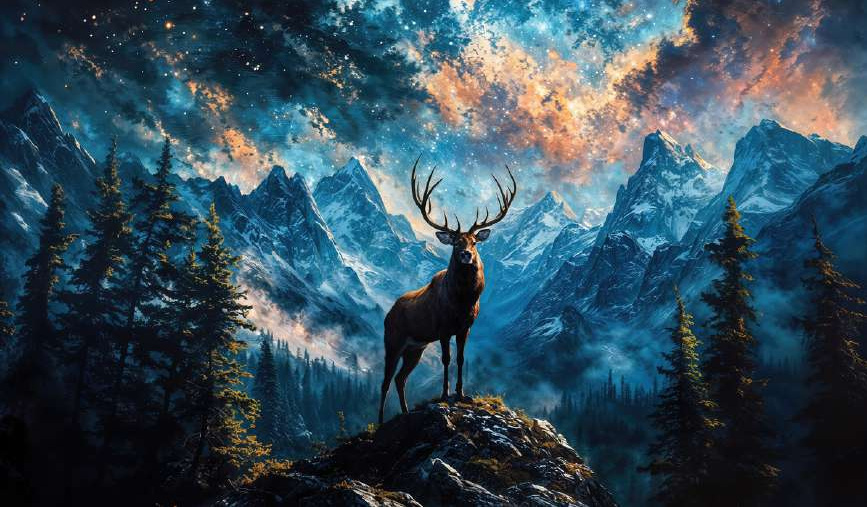
Since early 2024, Lohan has embraced a nomadic lifestyle, living and creating in a converted Mercedes van, producing music, art, and writing while immersed in nature. His creative practice exists at the intersection of technology and the natural world, merging digital innovation with organic beauty. Known for his surreal, whimsical, and colorful style, his work is rooted in the emotional power of color and guided by a desire to evoke optimism and hope, blurring the boundaries between reality and imagination.
The core of my artistic approach resides at the vibrant intersection of technology and the natural world, where I explore the boundless potential of both realms to produce surreal, whimsical, and color-rich artwork. By using cutting-edge digital tools and AI techniques, I aim to manifest visions that blur the lines between reality and imagination, inviting viewers into fantastical spaces. Color is an essential element in my practice—whether through bold, vibrant hues or subtle tonal shifts, each piece is intentionally designed to evoke deep emotional resonance and spiritual connection. In an often uncertain and challenging world, my philosophy is grounded in optimism and hope; through my art, I aspire to inspire, uplift, and lead audiences on a journey of discovery and wonder
1.From producing bass music (as High Dude) and lo-fi hip-hop (as Gakusha) to earning a PhD in Aesthetics—how has your understanding of sound and visual art evolved over time?
My artistic practice has always been a way to make sense of the world and my place within it. Over the years, what has changed most is my relationship with art itself — how I approach it, and what it means to me. In my earlier years, I leaned heavily into analysis and technicality. I approached sound in a structured, intellectual way. Music production was a space where control and precision dominated. My PhD research deepened my grasp of the cultural and creative industries — politically, sociologically, historically — and that mindset often governed how I approached sound. With time, I moved toward a more intuitive, emotionally connected practice. I became less interested in deconstructing and more drawn to presence, feeling, and meaning. This shift led me to embrace visual creation, where I explore imagination, inner harmony, and a contemplative connection with the world. Today, my work feels more integrated: less about proving, more about sharing something sincere and alive.
2. What initially drew you to working with AI and digital tools in your art practice?
I’ve always enjoyed exploring new tools and mediums as ways to express myself. Before working with AI, I sometimes drew by hand — mostly black-and-white pencil portraits — and I had long been fascinated by technology’s artistic potential. My first real experiment with AI was in late 2021 with Artbreeder. It was intriguing, but Midjourney (v3) truly captivated me; it felt like stepping into a door that opened onto endless worlds.
That experience led me back to Adobe Photoshop & Lightroom, tools I’d used for photography, but now with a renewed, more exploratory purpose. Over the past three years, as the tools evolved, so did my practice. I refined my methods, focusing on creating imagined worlds and characters infused with elements of fantasy, science fiction, and a sense of peace — visions that feel both otherworldly and human.
3. How do you balance control and randomness in your AI-generated works?
It depends on the piece. Sometimes I start with a clear vision, but more often I let chaos lead. I see randomness as a vital part of creation. Midjourney’s “chaos” parameter suits my way of working, allowing the unexpected to surface first, before I begin to shape it. Control doesn’t appear at the start; it emerges as I make sense of what’s in front of me. That’s when intention sharpens and meaning takes form; a kind of dialogue with the present moment.
Chaos never repeats itself, and neither do I
Of course, technical skill matters. The more I understand my tools, the more precisely I can guide the work — letting unpredictability breathe while still steering toward something resonant.
4. What kind of emotional or intellectual response do you hope your work evokes in people who encounter it for the first time? Have you ever felt like changing your work to make it more appealing to others?
I never create to please others. For me, that would go against the very nature of what I consider to be art. I don’t make work to meet expectations, and once a piece is out in the world, I accept that I no longer control how it will be interpreted — emotionally or intellectually. Because I’ve learned to listen to myself and create from a place of inner alignment, I think people often feel that sincerity in my work. I’ve received messages from people saying my illustrations and stories bring them calm or help ease their anxiety. That means a lot to me, because I’ve been there too. But I won’t shape my work to meet trends or pressures. I believe the world benefits when people stay true to their own path rather than allowing themselves to be molded by society’s expectations. My work reflects this conviction.
5. You talk about optimism and wonder — do you ever feel pressure to stay positive, even when you don’t feel that way inside?
Not really. These feelings genuinely reflect where I am today, though it hasn’t always been so. For me, optimism is not only emotional, it’s necessary, even political. I sometimes create darker pieces, but I rarely share them. I don’t want to add to the heaviness the world already carries. Earlier this year, I went through a difficult few weeks and stopped creating entirely. I didn’t force myself to stay positive. I accepted the pause, observed the emotions, and let them pass. I don’t pressure myself to stay positive or to constantly create. I accept the natural rhythm of this life, with all its seasons.
6. Do you think your art could still exist without the mobility — the van, the movement, the in-betweenness?
Absolutely. Nomadism influences my artistic work, especially through its closeness to nature, but it isn’t the source of my creativity. I was creating long before I started living on the road in early 2024. That said, being between places — between routines and structures — keeps me open to possibilities, while clearing my mind and inviting reflection. It’s the clarity and openness this lifestyle fosters, not the movement itself, that fuels my art. The sense of freedom it offers has been deeply positive for both my well-being and creativity.
7. Do you remember the first image or visual that truly moved you?
The first that comes to mind is Princess Mononoke by Hayao Miyazaki. I saw it in theaters when I was in elementary school, and it left a lasting impression on me. Even then, I was deeply struck by its visuals — the beauty of the forest spirits, the power of the landscapes, and the terrifying presence of the corrupted creatures. That mix of wonder and unease moved me on a level I couldn’t fully understand at the time, but I felt it deeply. Looking back, I think its balance of light and darkness shaped my own attraction to blending softness with tension in my work.
I create simply because it feels like the most meaningful thing I can do with my time on Earth.
8. Your visual art feels dreamy and soft, while your music is often gritty and raw. How do you relate these two sides of your creativity? Do they clash or complement each other?
To me, they absolutely complement each other. They reflect different emotional landscapes I’ve experienced — a progression from who I was to who I am. My bass music compositions carried raw energy, expressing a part of me that wrestled with intensity, unrest, and inner conflict. It channeled emotions I couldn’t always speak aloud: anger, dissonance, sadness. In contrast, my lo-fi hip-hop project and my visual art emerged later, as I reconnected with softness, clarity, and wonder. They reflect a more peaceful relationship with myself and with the world — and a wider palette of emotions, too. I don’t see these sides as contradictory. They are two chapters in the same creative journey. One explores anger and tension; the other embraces stillness and beauty. Together, they form a fuller picture of me. I don’t try to reconcile them — they simply co-exist, each with its own temporality. In a way, it’s a creative timeline of my path toward acceptance and self-knowledge.
9. What do you feel when you make something — is it more about escaping or confronting reality?
Neither. In the past, creation might have been both an escape from reality and a way of confronting it. But now I create simply because it feels like one of the most meaningful things to do with my time on Earth. Looking back, I understand just how much good creation can do for the spirit. I choose to create consciously, not out of necessity or reaction, but as a way to stay connected to myself. I’ve built a way of life that prioritizes freedom — freedom from the constraints of dominant societal structures — and that freedom allows me to stay creative. It’s a virtuous circle: the more I create, the more in tune I feel with myself, and the more in tune I am, the more space I have to create.
10. Looking ahead, what uncharted territories or dreams are calling you in your creative journey?
I’d like to return to music and produce a second Gakusha album with long-time friends and fellow musicians. For the past two years, most of my creative energy has gone into visual art, and I’d like to find a better balance between music and illustration. I’m also passionate about writing and photography. I’ve been working on a novel that I began at the very start of my doctoral journey, and I’d really like to continue developing it. One day, I’d love to unite sound, image and story into a single immersive project — something layered and emotional. I don’t put pressure on myself. For now, I follow my curiosity wherever it feels meaningful to go.
www.lohanlegalloudec.com @filament_collective
Originally published in SPREADS magazine, Autumn 2025. Read the original issue in the back-issue archive.
Source: Originally published in SPREADS magazine, Autumn 2025. Read the original issue in the back-issue archive.
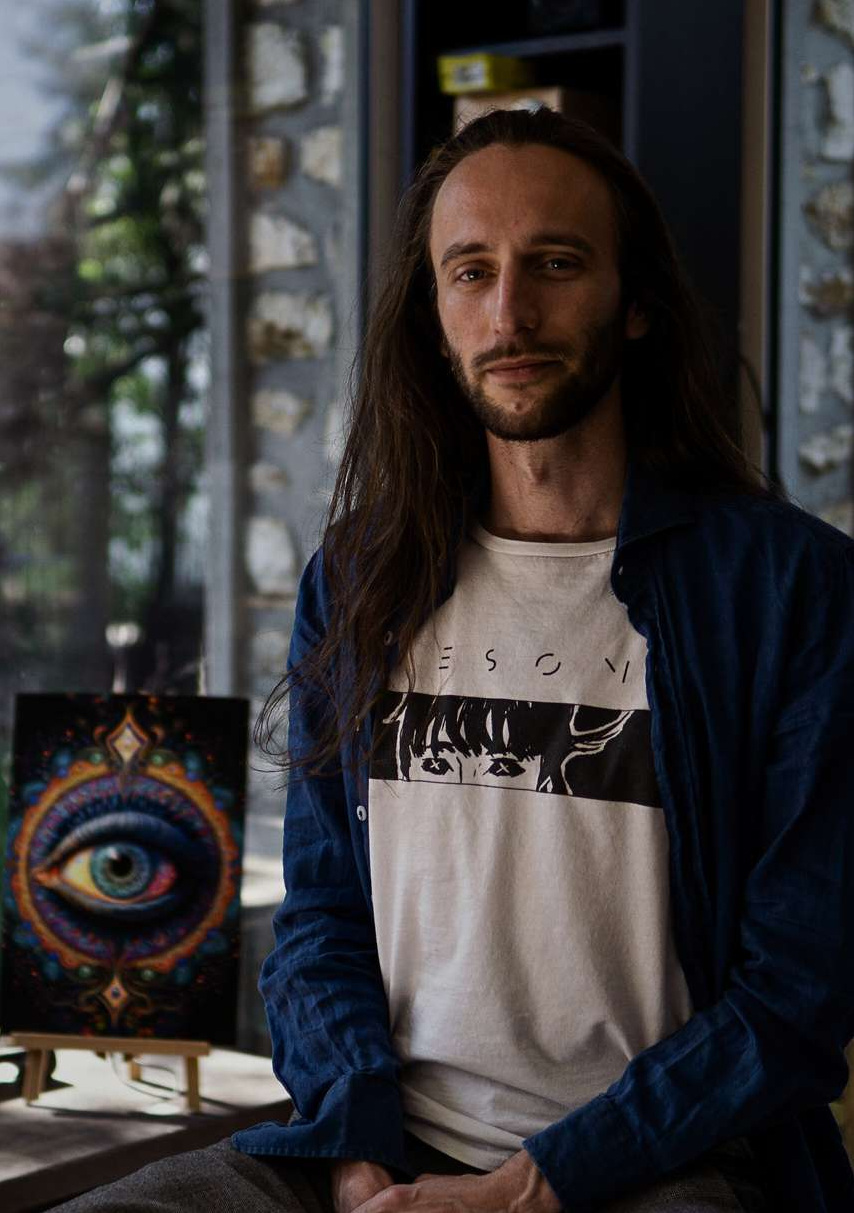
Image reproduced from SPREADS magazine, Autumn 2025, p. 7.
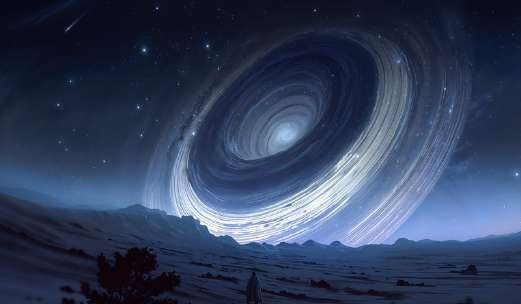
Artwork: Lohan Le Galloudec, A Fragment of Infinity. Image reproduced from SPREADS magazine, Autumn 2025, p. 8.
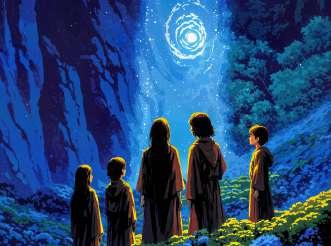
Artwork: Lohan Le Galloudec, The Voice of the Cosmos. Image reproduced from SPREADS magazine, Autumn 2025, p. 10.